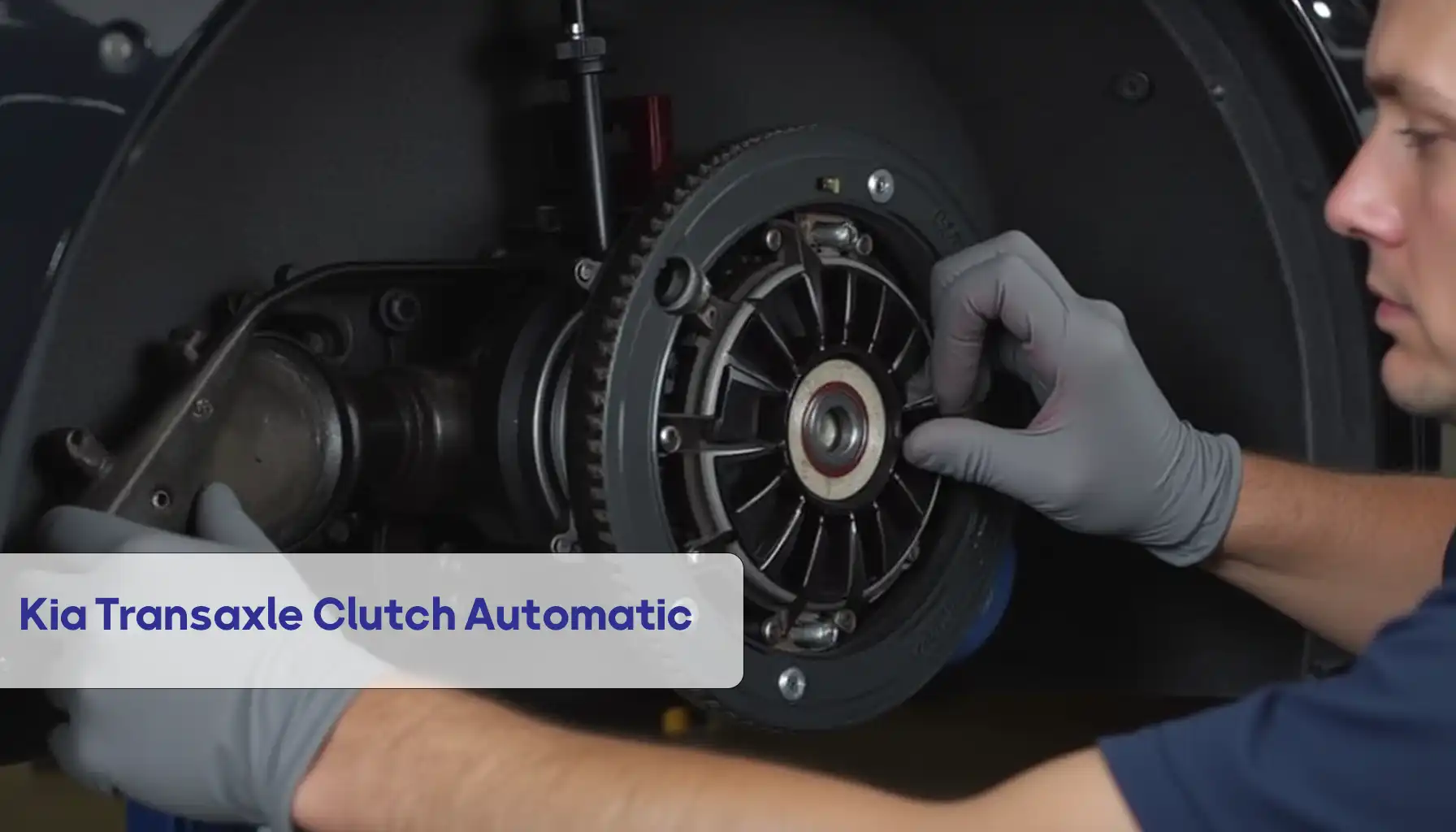
The clutch disc is absolutely essential accessory in automotive engineering that every vehicle, especially those with manual transmission systems and automated manuals, needs to function smoothly. This little powerhouse plays a crucial role in the driving mechanism, which involves smooth gear changing and effective power transfer in vehicles such as Kia or Hyundai.
It is practical and would soon be seen as very essential for car owners to understand how the clutch disc works in order to prevent undue wear on the transmission system. All these might just end up making a huge difference in the performance life of a car for its owner and an equally greater difference in driving, as such.
What is a Clutch Disc and why it’s Essential Component of Your Vehicle
The clutch disc, which is also known as the driven plate, is one of the many important components in the transmission system of a vehicle, particularly a manual transmission. Basically, it acts as a bridge between the engine and the transmission to smoothly transfer power from the engine into the wheels. Without this crucial piece, shifting gears would have been just like wading through quicksand, and the driver trying to get proper control of the vehicle.

The clutch disc is a part of the dry, single-disc, friction clutch system used in Hyundai and Kia vehicles. This clutch type operates through friction produced between the clutch disc and other entities like the flywheel and pressure plate.
Upon engagement, the clutch disc clamps against the flywheel, allowing power transfer from the engine to the transmission and, consequently, to the wheels. When disengaged, the disengaged disc separates from the flywheel; hence, the flow of power is cut off, which permits the driver to change gears smoothly. Basically, understanding how it works is important for any person who wants to know how manual cars work.
A clutch disc is commonly made of high-friction material that can withstand a lot of heat and pressure. It wears out over time, though, and might need replacement. This is very important to Hyundai and Kia owners regarding monitoring the clutch for its wear, since the inability to address early may result in very expensive repairs.
Arsintrading deals in all types of automotive components; thus, this is the ideal place to buy transmission parts in Dubai. Be it a completely new transmission system or any particular parts your car requires for repair, Arsintrading assuredly provides high-quality products with international standards guaranteed. We have a huge inventory whereby customers can comfortably access various transmission parts that would go well with different models and brands of vehicles to keep those cars running efficiently and effectively.
How are Clutch Discs Attached to the Shaft? Understanding the Critical Connection
The clutch disc is not a single entity but rather part of a much bigger system that works together to ensure a comfortable ride. In Hyundai/Kia vehicles, the clutch disc is mounted on the input shaft of the transmission, typically by splines that enable the disc to move freely up and down the shaft. This attachment enables the clutch disc to travel with the output of the engine while allowing flexibility during disengagement whenever the driver presses the clutch pedal.

When the clutch pedal is pressed, hydraulic pressure is produced, which actsuates the slave cylinder. This component in turn travels the release bearing that pushes the pressure plate from the clutch disc. It is this disengagement that uncouples the engine from the transmission to allow the driver to shift gears. Releasing the clutch pedal reverses the process: The release bearing moves rearward, pulling the pressure plate away, and the clutch disc again presses against the flywheel, the power route again directed toward the wheels.
It is all within a few seconds and is an engineering miracle that gives the driver the required amount of control with view to his vehicle. To the owners of Hyundai and Kia cars, such understanding helps in their maintaining of the car, as a failing clutch disc can result in poor shifting, strange noises, or even complete transmission failure if left unattended on time.
Read More: Kia Soul Clutch Issues
Are Clutches Universal?
While performing the same basic function in every respect, clutches are not universal-between different vehicle types. Each clutch is designed for the model it will eventually serve, and such is the case with Kia and Hyundai vehicles, too. Such factors as engine power, vehicle weight, and intended use determine a particular clutch system’s design and materials.
You may need to read: How to Replace the Kia Spectra Clutch Disc
Obviously, the clutch that would feature in some high-performance Hyundai or Kia model-listen as I refer to the Kia Stinger and Hyundai Genesis-would be rather different from the one intended for smaller, economically-minded vehicles, such as the Kia Rio or Hyundai Accent. Whereas performance-type cars require heavier-duty clutches to manage higher torque and more aggressive driving, regular commuter cars sacrifice the extremes of performance for smoothness and longevity.

Besides, different models of the same brand also have differences in clutch designs due to the difference in transmission systems, driving modes, and even market demands for geographical reasons. Consequently, although their basic function remains identical, the specific components-like the clutch disc-are far from universal and should be absolutely matched with the requirements of the vehicle.
For Kia owners, Arsintrading is also where one can get Kia genuine-quality spare parts. The company specializes in offering genuine and top-grade replacement parts for all models of Kia to ensure your vehicle’s longevity and optimal performance. From engine components down to exterior accessories, we will provide parts that have durability and precision, allowing Kia owners to be confident in taking care of or repairing their vehicles.
Real-World Performance: How to Choose the Right Hyundai Clutch Disc
It is very important to understand the difference between Stock (OEM) and Aftermarket when you are going to buy a replacement Hyundai clutch disc if you want to be satisfied with the result. To support this statement, a lot of community feedback and technical reviews from Hyundai owners have been analyzed; some companies like ZF Aftermarket in Europe gave specific information about it that may can help Middle-eastern users. so here is what you need to know before making a purchase:
Stock and OEM Replacements
The stock clutch (most of the time, it is a Valeo made clutch for Hyundai) is the standard choice for the majority of the daily drivers. It has a familiar feel, but it is only meant for standard commuting. City drivers may find the stock setup reliable; however, it may seem “bouncy” because of the spring design and the driver will be limited in the safe use of aggressive driving or high-performance modifications. SECO replacements, on the other hand, are characterized by a firmer engagement due to the use of rubber bushings and, by the same token, they may develop glazing if they are forced beyond their power handling limits.
Performance Aftermarket Options
To Hyundai owners who want to upgrade their vehicles, especially engine-modified ones, the brands like ACT and Centerforce are the ones to look for as they offer better grip. To give an example, the ACT 6-Puck sets are famous for their rapid engagement and holding power, they are frequently used together with chromoly flywheels. Nevertheless, this increased performance is accompanied by the downside of more chatter and a heavier pedal feel.
About Reliability: However, not all the aftermarket clutches are equally good. As a result of long-term issues with some “Stage 3” performance kits, which have been the subject of considerable attention in terms of longevity, customer support, and premature spring failure, there have been reports of these types of kits most frequently. In conclusion, obtaining your Hyundai clutch disc from a trustworthy dealer such as Arsintrading guarantees that you will not buy quality counterfeit products that may cause you to be in trouble.
Performance and high-power setups often require specialized clutches and flywheels:
| Brand/Model | Experience/Performance | Notes on Feel/Failure |
| ACT 6-Puck Set | Great clutch that holds up to a beating. Paired with a chromoly flywheel | Described as silent as a mouse and grippy like no other. Sometimes chattery, but engagement is quick (within 1/2 inch of pedal movement). |
| ACT Street Disc | Recommended; grips like a “mother” after nearly 20,000 miles. Paired with a Fidanza flywheel. | No problems reported. |
| Centerforce Stage 2 (93 Eclipse clutch) | Described as “grippy as all hell”. Used with a header, bored throttle body, and stock flywheel. | Installation included a pull-to-push conversion. |
| XTD | Not bad for a mild Stage 3 clutch | Lasted a couple thousand miles on mild boost, but started slipping badly at approximately 230 wheel horsepower (whp). |
| Clutchnet | The only pull clutch known to hold power on a strongly boosted Tiburon, easily held 270++++ whp. | Some Users says it has poor customer service, with difficulty understanding the representative. |
| SPEC | Described as the “Shittiest clutch 3V4R” with even shittier customer service. | Based on some reviews, two units exploded and left the some users stranded. The company allegedly blames failures on the customer or claims the input shaft in the transmission is unbalanced, an excuse dismissed by a reputable transmission shop |
Dual Disc Clutch: What is it and Are They Noisy?
The higher-order setup would be the dual disc clutch system, seen on high-performance or heavy-duty vehicles. Instead of one clutch disc, it utilizes two, greatly increasing friction area and thus allowing much more power without slipping the clutch. This is normally not seen on normal everyday vehicles-such as most of the Hyundai and Kia models-but it may be present in the performance versions or applications that are classed as heavy duty.
A twin-disc clutch mainly has an advantage of handling higher torque level without increasing the size of the individual clutch components. It enables better power transmission to help sports cars or trucks function more professionally. However, it is noisier at times compared to single disc clutches, especially when disengaging. It can also be a bit noisy, like a slight rattling or humming, especially when additional components and friction between multiple discs are involved.
In performance models of Hyundais and Kias, dual disc clutch noise is normally minimal due to sound-dampening techniques and judicious engineering. Those drivers of vehicles with dual disc clutches that have been upgraded or otherwise modified by an aftermarket may find the noise more noticeable, but this is normal and generally part of the trade-off with such higher-performance systems.
Hyundai Clutch Failure Diagnosis, Symptoms, and Fixes
The clutch is often the last thing to go, and it usually does not fail suddenly. Implicitly it is warning asleits before the transmission is completely changed at great expense. It is very important for a Hyundai owner to be familiar with the signs and the associated terms:
Slipping Mostly
When the clutch is not renewed in a timely manner, the failure comes from the disc detaching or releasing the flywheel. As an illustration of this, by putting your foot on the gas pedal, you will see the engine RPM increase, whereas, the car speed will only slightly change. Without a doubt this is the most typical symptom of the worn side of the friction material in the clutch disc mounted on your Hyundai. A burning odor due to overheating may also be detected at the same time.
Grabbing or Chattering
In case the vibrations or the sudden jerks of the vehicle happen at the moment when you lift the clutch and do it gradually, the phenomenon is called chattering. The most common reasons for it are the pressure plate defects or a flywheel that is not flat.
Dragging
When you hear a grinding sound while shifting gears, it might be because the clutch disc is still holding the flywheel. This “drag” puts the transmission synchronizers in a difficult position and thus they can get damaged very soon.
DIY Diagnostic Tests for Owners
Are you trying to figure out whether the clutch in your car is malfunctioning or not? You could accomplish this feat by conducting a series of tests hereafter outlined, which are also commonly performed by technicians.
This video explains how to diagnose a clutch:
The Road Test. At a low speed change the gear from first directly to the fourth and press the accelerator. A case of RPM rising without the car also gaining as much speed is the telltale of your clutch being slipped.
The Engagement Point Test. Normally in good health the system is characterized by the presence of some free play in the pedal. When the operation of the clutch can be felt only when almost all of the pedal is raised, it is the time for the disc to be changed.
Clutch Disc Failure Causes in Hyundai Models (2018–2025)
| Hyundai Model (Year Range) | Transmission Type | Primary Failure Symptom | Root Cause of Clutch Failure or Dysfunction |
| Tucson (2018) | 7-speed Dual-Clutch Transmission (DCT) | Hesitation or Shuddering (particularly noticeable when accelerating from a stop). Abnormal Vibration at low speeds (Judder). | Design/Control Defect: A defect in the Transmission Control Module (TCM) logic or transmission clutch application logic. |
| Sonata (2018–2019) | 7-speed DCT (1.6L Turbo) | Hesitation or Shuddering when accelerating from a stop. Abnormal Vibration at low speeds (Judder). | Design/Control Defect: TCM software/logic problem. Failures were exacerbated by hot weather conditions causing the clutch system to overheat. |
| Santa Fe (2021–2022) | 8-speed Dual-Clutch Transmission (DCT) | Total loss of motive ability; Transmission disengages after warning lights illuminate. | Manufacturing Defect (Electrical): Inadequate soldering on the circuit board that controls the transmission oil pump. |
| Elantra N, Kona N, Veloster N (2021–2022) | 8-speed DCT | Total loss of motive ability; Transmission disengages (fail-safe reaction). | Manufacturing Defect (Electrical): Inadequate soldering on the circuit board controlling the transmission oil pump. |
| i20 (Manual Transmission) (Model Year 2016 discussed, symptoms apply to later manual vehicles) | Hydraulic Manual Clutch | Clutch pedal goes hard/stiff in heavy traffic or hot weather. Biting point drops to the floor or car gets stuck in gear. | Hydraulic/Thermal Failure: The clutch fluid overheats or boils in traffic, leading to system failure (master cylinder rod snapping). |
| General DCT Issues (2018–2025) | 7-speed / 8-speed DCT | Grinding Noises while shifting; Difficulty/Jerky Shifting. | Physical Component Failure: Damaged or worn clutch (clutch disc itself). Malfunctioning clutch actuator. High Thermal Load: Excessive heat due to friction/slippage, possibly resulting in clutch material abrasion. |
Does a Clutch Require Fluid?
Most of the modern vehicles’ clutches, including Hyundai and Kia, have hydraulic fluid inside them to smoothen the process of operation. A clutch system would include hydraulic cylinders filled with clutch fluid, usually brake fluid, in master and slave cylinders. This hydraulic fluid transfers force from the clutch pedal to the clutch components for smooth disengagement and engagement of the clutch disc.
The hydraulic fluid is crucial in operating a problem-free clutch system. Low or contaminated fluid levels may cause difficulty in gear changing, a spongy clutch pedal, or total clutch failure. It is from this perspective that the regular check of clutch fluid level and ascertaining whether the fluid is clean are the starting-point pre-requisites for any Hyundai or Kia owner. The hydraulic fluid over time will absorb moisture and degrade; therefore, it has to be replaced occasionally for the clutch performance to be at an optimum.
Fluid checks have been included in vehicle maintenance by owners, especially those with manual transmission models of Hyundai/Kia. The fluid replacement shall be done in conformance with one’s model and in a manner that would prevent early wear on the clutch system by following the prescribed schedule.
Conclusion
Every owner of these vehicles, mostly those owning a manual or automated manual transmission car, should thus have an understanding of the clutch disc in function and maintenance. In facilitating smooth power transfer from the engine to the transmission for precision in control and effectiveness in gear changes, the clutch disc is an important component. While the clutch itself might not be universal and can differ far from one model to another, the basic principles will be the same for almost all vehicles. Monitoring the wear and tear in a clutch closely, checking hydraulic fluid levels, and listening for unusual noises are just some ways to ensure a healthy clutch system, which can extend the life of your vehicle and keep driving smooth.
Is it possible to change only the Hyundai clutch disc without the pressure plate?
It is not advisable. A worn Hyundai clutch disc is usually accompanied by a damaged pressure plate and flywheel. Just replacing the disc can result in a bad engagement and early failure of the clutch.
What is the working time to replace a Hyundai clutch?
It is mostly between 5 and 8 hours, with the exact time being dependent on the model. Labor costs may be anywhere between $700 and $1,000 for standard vehicles such as the Hyundai Accent.
Do automatic Hyundai models (DCT) have clutch discs?
Certainly. The DCT systems of Hyundai have two internal dry clutch discs. They are not serviceable by the user, but they are wear items and eventually need a professional replacement.
What are the symptoms that show the clutch needs a replacement?
When changing gears becomes difficult and you can hear grinding noises while trying to change gears, then it is most probably that the clutch in your vehicle has to be changed. Also, the other symptoms are;
• The clutch begins to slip or shudder.
• The clutch pedal is unusually difficult to press or feels spongy/loose
• The engine revs up but the vehicle speed does not increase, or the vehicle fails to move
What other parts might need replacement during a clutch service?
When replacing the clutch, technicians usually inspect other related components like Pressure Plate, Flywheel, Release Bearing (Throwout Bearing), Seals, Avoid Creeping, and Use Brakes or Accelerator